
Cruise Ship Life FAQ
Table of Contents
Most Commonly Asked Questions About Working on a Cruise Ship!
I had so many questions before I started working on a cruise ship. Working on a cruise ship is very different from working on land. You live where you work, and your workplace travels with you. The coolest part about it is that your home moves away with you to different exciting destinations where people pay to go. How exciting is that?
I have compiled some frequently asked questions about working on a cruise ship. This list is an ever-growing list, and new questions will be added frequently.
What’s the Minimum Age Limit to Work on a Cruise Ship?
In order to work on a cruise ship, you need to be at least 18 years of age. It’s important to keep in mind that most cruise lines based in the US will limit the drinking age to 21 years old. You won’t be able to have drinks onboard and there will be a red line across your crew card, so the bartender or server cannot serve you a drink while are you are under 21.
Drinking Age Onboard

If you’re caught drinking underage, you will be immediately dismissed from the ship, as well as the server, bartender, or friend who gave you drinks. So if you are under 21 or if you have a friend under 21, don’t be tempted to buy them a drink because both can get in trouble and be immediately fired.
Do I Need a Passport to Work on a Cruise Ship?

Yes, you do need to have your passport to work on a cruise ship, unless you are a US Citizen or permanent resident that will be working on the NCL Pride of America, which is based in Hawaii year-round and does not leave US territory.
If you are not going to be working on the Pride of America, you will be traveling to different countries while onboard. Now you won’t get a stamp from every single country that you visit ( and that’s a bummer) but the ship’s HR department will retain your passport for inspection if needed by immigration and customs when the ship arrives in each international port of call.
Have All Documents in Order
Normally the cruise line will submit a manifest containing all the passengers and crew before arrival in the port of call, and it’s up to the immigration officer to decide if they want to have a secondary inspection, if they do, they might need to see your passport, and in rare cases you in person for additional screening.
If you have previously visited a country, overstayed your visa or had issues with immigration, there’s a great chance that you will go through a secondary inspection when you arrive at the country via the cruise ship. If you fall into one of those categories, make sure you have everything in order and any supporting documents you might need.
Can I Bring my Child/Family Member on a Cruise Ship While Working?

There are some positions on the cruise ship where you can bring your child or family member with you. If you are a captain or a high-level officer who has this entitlement, you may be able to bring a family member with you.
There are some restrictions on the length of stay for certain situations. It could be only for a few weeks while some can be for the entire duration of the contract. This will all depend on your position on board and the rules set by the company you will be working for,
When I was onboard one of the ships, Norwegian Jade, the captain would have his wife and two daughters on board. They usually stayed for about a month, sometimes two months. They had access to both crew and passenger areas, lived onboard, and homeschooled the kids. The kids came often to the kids’ club, and everyone knew them.
If you are a guest entertainer, have a child or family member, and want to bring them along for a visit, you might be able to have that arranged before you sign a contract with the cruise line. There was an acrobat couple and they had a six-year-old son, and he also used to come to the kids club frequently. The acrobats had a four-month contract and they had their son with them the whole time.
Depending on your position onboard, you might have this privilege but the majority of positions do not.

What to Pack for your First Contract on a Cruise Ship!
Starting your first cruise ship contract? This essential packing guide covers what to bring, what to skip, and how to avoid common first-contract mistakes before you join your ship.
Some of the positions with this privilege:
- Captain
- High-Rank officers (Staff Captain, 1st officer, etc)
- Doctor
- Chief Engineer
- Cruise Director
- Guest Entertainer
- Hotel Director
How Much Money Do Cruise Ship Employees Make?

The answer depends on what position you’re working for. For example, Captains can make as much as $15,000 a month while some dishwashers can make as low as $800. The salary onboard will vary from company to company. Always keep in mind that you have almost no expenses while working on a cruise ship, leaving room for savings or treating yourself!
Do Crew Members Get Free Internet on a Cruise Ship?
Internet access is much better than it used to be, but free Wi-Fi isn’t guaranteed on every cruise line.
Some companies provide complimentary messaging services, limited internet access, or discounted crew packages. Others charge for different levels of connectivity.
Modern satellite systems have improved internet speeds on many ships, making video calls and streaming more practical than in the past. However, connection quality still depends on the ship, location, and network conditions.
Before joining, ask your recruiter whether crew Wi-Fi is included, what packages are available, and whether video calls or streaming require additional payment.
Money-saving tip: Consider using an international eSIM or mobile data plan while in port. Just remember that land-based mobile plans may not cover maritime cellular networks at sea, which can have expensive roaming charges.
Tip: give yourself a monthly budget for internet usage as costs can add up considerably. I have friends that have spent over $500 a month on internet alone, a not very smart way to use your hard-earned money.
How Can I Stay Connected While Working on a Cruise Ship?

There are many ways you can save money on the internet and not have to rely on the ship’s slow internet access. One easy way is to have a plan from your country that allows international roaming. We currently use the T-Mobile plan—where we can have a data package valid in 160 countries, together with free texts and $0.20 a minute in international calls. All of this for $50 plus taxes a month or $96 for two lines. This plan has been invaluable for us while on the cruise ship and during our travels.

AIRLO is a cutting-edge eSIM platform that simplifies mobile connectivity for travelers and remote workers, offering data services in over 130 countries without the need for physical SIM cards. With a user-friendly app, you can easily purchase and manage your data plans on the go, ensuring you stay connected wherever your adventures take you.
Exclusive Offer: Sign up now and use the discount code ADRIAN4941 to get $3 off your first data plan! Experience the freedom of connectivity with AIRLO and make the most of your travels.
What Kind of Jobs Are Available on a Cruise Ship?

There are a lot of different jobs available on a cruise ship. Think of a cruise ship as a moving hotel. Any job that you find in a typical hotel you will be able to find on a cruise ship.
Some examples of jobs on cruise ships:
- Waiters
- Room Service
- Engineer
- Captain
- Cruise director
- Deck engineer
- Butcher
- Baker
- Cooks
- Bartenders
- Entertainment staff
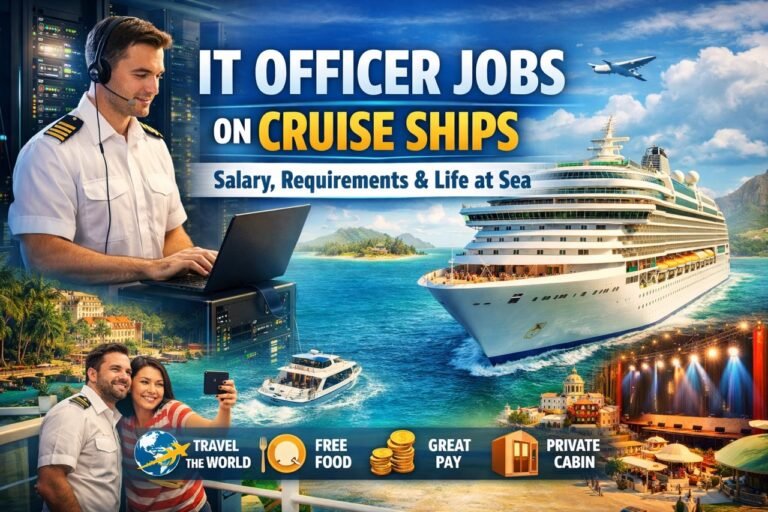
- IT Staff
- Finance Accountant
- HR
- Receptionist
- Sales Staff (shops)
- Art Auctioneer
- Training Specialist
- Casino staff
- Future Cruise Consultant
- Shore Excursions
- Photographer

Want to learn more about working on a cruise ship and its many positions? Visit the page Positions to learn more!
How do You Get a Job on a Cruise Ship?

With so many cruise lines gathered around the world and so many options of jobs you could apply for, it can be a challenge to decide where to apply and to which company to apply. After all, salary and benefits can vary dramatically within companies. We have some information on our Cruise Lines page about some cruise lines and how to apply for each one.
Once you decide where to apply, there are essentially three ways you can apply for a cruise ship job:
Directly With The Company
You simply go directly to the company’s careers page and search for open positions. Once you find a suitable job, you apply for the position by first creating an account, then you upload your resume to their database, fill out a questionnaire containing your contact information. If successful, they will email or call you to set up an interview.
Through a Hiring Agency
Most companies use hiring agencies in different countries to help them attract a majority of individuals for certain positions. Some hiring agencies will only hire for restaurant positions, some only for entertainment positions while others might hire for any open position.
Through Job Fairs
Some cruise lines, especially Norwegian Cruise Line, will host some job fairs for certain positions. Job fairs are rare occasions and cruise lines will focus mainly on using social media, their website and hiring agencies.
If you are interested in learning more about the job fair for Norwegian Cruise line please see the Norwegian Cruise Line page.
Do Cruise Ship Workers Get Days Off?

Unlike most jobs on land, cruise ship employees often work seven days a week during their contracts.
This doesn’t mean you’re expected to work continuously without rest. Your schedule depends on your department, position, and the ship’s daily operations.
Some crew members work split shifts, with several hours between their morning and evening duties. Others work rotating schedules or have longer breaks when the ship is in port.
Under applicable Maritime Labour Convention rest-based standards, seafarers generally must receive at least 10 hours of rest in any 24-hour period and 77 hours over seven days, subject to permitted exceptions.
Will you have time to explore ports? Often, yes! Many employees have opportunities to go ashore between shifts, provided their work schedule and immigration clearance allow it.
However, you shouldn’t expect a traditional weekend or a guaranteed full day off every week. Ask about the expected working schedule before accepting your contract.
How Long is a Cruise Ship Contract for Crew Members?
Cruise ship contracts for crew members generally range from around 4 to 10 months in duration. The exact length of the contract can vary depending on several factors, including the position, the cruise line, and the ship’s itinerary.
For entry-level positions or departments like housekeeping, food, and beverage, or guest services, contracts are typically around 6 to 10 months long. These contracts often cover a full cruising season or multiple voyages, allowing crew members to gain experience and contribute to the ship’s operations for an extended period.
Higher-ranking positions, such as officers or department heads, may have shorter contracts that can span 4 to 6 months. These contracts often require a higher level of commitment due to the increased responsibilities and leadership roles onboard.
It’s worth noting that contracts are usually renewable, and many crew members opt to extend their contracts for subsequent periods if they enjoy their work and the ship’s environment.
While these durations are common, it’s essential to check the specific terms and conditions outlined in the contract before signing, as they may vary depending on the cruise line and the particular ship.
Can I Leave the Ship If I Have a Family Emergency?

Being away from family is one of the hardest parts of working on a cruise ship. Missing birthdays, holidays, and important family events can be difficult, especially during long contracts.
But what happens if you have a serious family emergency back home?
Most cruise lines have procedures for requesting emergency leave, although approval and travel arrangements depend on your circumstances, company policies, and employment agreement.
If something happens, contact your supervisor or onboard Human Resources department as soon as possible. They can explain your options and help coordinate your departure if emergency leave is approved.
Who pays for your flight home? It depends on the reason for your departure and the rules that apply. Personal emergency leave and legally required repatriation are not necessarily the same thing. Under the Maritime Labour Convention, certain repatriation circumstances require the shipowner to cover transportation and other specified expenses.
Before joining your first contract, ask about emergency leave, compassionate leave, and repatriation benefits, so you know what to expect.
You Pay For All The Costs!

Due to such short notice during an emergency, most crew members choose not to request a work break, mainly for financial reasons or even timing. If a loved one passes away and they are in the Philippines (typically the majority of the crew onboard are from the Philippines) it would take approximately two days just to arrive in the country from the US, where many of the Cruise Ships are.
If the company grants you a work break, you will be given a new letter of employment for your return when you go through customs in the country you will be joining the ship. Remember that all the costs of flights, hotels, and transportation to the ship are out of your own pocket.
Do Cruise Ship Workers Get Free Food?

One of the great things about working on a cruise ship is the minimal expenses that you have while working onboard. Food is free on cruise ships, and you don’t have to pay for it. You will have breakfast, lunch, dinner, and some snacks included, all served at the crew messes, which are restaurants designated only for crew members.
You also might be able to eat at the cruise ship’s restaurants that the guests eat, and as long as a guest doesn’t have to pay for it, you also don’t have to.
There are some specialty restaurants on every cruise ship that charge either a flat fee or à la carte items, and if you want to eat at one of those restaurants, you have to pay just like the guests do unless you win a free meal voucher by winning a bingo game, raffle or by being awesome.
What’s the Crew Food Like on a Cruise Ship?

The meals for crew members are served buffet-style in the crew mess—that’s what they call the crew cafeteria. Usually, each ship has either two or three messes. Smaller ships might have only two. One for crew and staff and one dedicated only to officers.
- Crew Mess— Catered more towards Asian food since the majority of the crew are from Asian countries.
- Staff Mess – A more Western-style food.
- Officer’s Mess – For high-ranked officers. Typically with waiter service and a menu to choose from. The menu is sometimes similar to the main dining rooms onboard.
You Are on the Clock!
Your position onboard will dictate what type of access you have throughout the ship. If allowed, on your time off, you are free to eat at the guests’ restaurants, space permitting. Cruise ships usually have more than one main dining room (free), a buffet-style restaurant, and some specialty restaurants (for a fee). You are welcome to eat at these restaurants if your position allows it. Some companies offer crew discounts on beverages but not on food.

There are specific times for breakfast, lunch, and dinner. Some ships also offer a late-night snack. Outside of these times, there will be no food available. You cannot just come later to grab a snack to bring to your cabin. If you miss a meal, you better have some snacks in your cabin to keep you going on your shift, which can be up to 12 hours a day.
Can the Crew Drink Around the Ship?

Alcohol at the crew bar is very inexpensive. You often can get beers for about one dollar and wine by the glass or by the bottle at very low prices. If you have access to guest areas (not all crew do) and if you decide to drink at the bars that the passengers drink, you will pay the premium price that guests pay.
Some cruise lines might give you a discount but still going to cost more than you would pay at the crew bar, but sometimes it’s nice to be in a bar outside, catching a nice breeze, looking at the waves, sipping a beer, cocktails, margarita or whatever your beverage of choice may.
Can You Work on a Cruise Ship For The Summer Only?

Yes, you can work on a cruise ship for the summer, but the only position that hires for the summer that I’m aware of is for seasonal youth staff. Cruise Lines hire not only during summer months but also during major holiday breaks like spring break, Easter, Thanksgiving week, and Christmas season.
During these breaks, cruise lines will hire additional staff to help with the peak number of families that will be on board. Some seasonal contracts can last for a couple of months, while some can last only for a few weeks, as low as one week. The position is ideal for college students, teachers, or anyone who enjoys working with kids and can commit to a seasonal contract.
My wife was once a seasonal youth staff member for Celebrity Cruise Lines, and they needed a seasonal youth staff member only for one cruise, a 14-day cruise sailing out of Southampton, UK, and ending in Barcelona. They paid for all the flights, and she got a nice two-week break to see the Mediterranean.
What is the Maximum Age Limit to Work on a Cruise Ship?
There is no age limit to work on a cruise ship written anywhere, however, I haven’t seen many senior people, in general, working on ships as their first contract. Sure I have seen people around their 50s and 60s working onboard, one of my previous coworkers had just celebrated his 69th birthday onboard and he seems like not stopping anytime soon, but he had been working for a few years before I started.
Depending on what position you’re applying for that won’t be a problem, but for positions that require a lot of energy or physical endurance, like cruise staff, waitstaff, Pool Attendant, deck crew, and laundry personnel, just to name a few, you might want to think twice before applying to make sure you can handle the physical aspects of the job. You will have to complete a full medical exam to make sure you are ship-shape and ready to go.

Want to know more about what’s required to work on a cruise ship? Please visit the post Requirements to Work on a Cruise Ship to learn more and get ready for an adventure at sea!
Getting Hired & Preparing for Your First Contract
Do I Need Previous Cruise Ship Experience?
No! You don’t necessarily need previous cruise ship experience to get hired. Many cruise lines recruit people who have worked in hotels, restaurants, retail stores, entertainment venues, and customer service positions on land.
For example, if you’ve worked as a waiter, bartender, receptionist, photographer, or youth counselor, your existing experience could help you qualify for a similar position onboard.
However, certain jobs require specialized qualifications. Deck officers, engineers, electricians, and some technical positions typically require specific training, certifications, or maritime experience.
My advice: Start by looking for cruise ship positions that match your current skills. Getting your first contract is often the hardest part. Once you have onboard experience, you may have more opportunities to advance or explore other roles.
Do I Need to Speak English to Work on a Cruise Ship?
Yes. English is the primary working language on most international cruise ships. You’ll need to understand safety instructions, communicate with coworkers, and perform your daily responsibilities.
However, you don’t have to sound like a native English speaker. What matters is being able to communicate clearly and confidently.
The level of English required depends on your position. Guest-facing jobs, such as reception, shore excursions, and cruise staff, generally require stronger communication skills than some behind-the-scenes positions.
Speaking additional languages can be a major advantage. Cruise lines welcome guests from around the world, and languages such as Spanish, Portuguese, German, French, Italian, and Mandarin can help you stand out.
Tip: Practice answering interview questions in English before applying. Being able to explain your previous work experience comfortably can make a big difference.
Do I Have to Pay to Get Hired on a Cruise Ship?
No. You should never have to pay a recruitment fee to secure a legitimate cruise ship job.
Reputable cruise lines and authorized recruitment agencies don’t charge applicants simply to submit an application, attend an interview, or receive a job offer.
However, there are legitimate pre-employment expenses you may need to cover, such as:
- Passport and certain personal documents
- Pre-employment medical examinations
- Required professional certifications
- Transportation to medical appointments or processing centers
- Other expenses permitted under applicable employment rules
Under the Maritime Labour Convention, recruitment and placement fees generally cannot be charged to seafarers, and required visa costs must be borne by the shipowner.
Important: Be cautious of anyone promising guaranteed employment in exchange for money. Always verify a recruitment agency through the cruise line’s official careers website.
Who Pays for My Flight to Join the Cruise Ship?
Many major cruise lines arrange and pay for your transportation to join the ship, but the exact arrangements depend on the company and your employment agreement.
For example, Royal Caribbean covers transportation from your designated gateway airport to the ship. However, you may be responsible for traveling from your home to that gateway.
The company will generally provide instructions about your flight schedule, arrival airport, and transportation to the ship.
Before joining, make sure you understand:
- Who books and pays for your airfare
- Whether checked luggage is included
- Who pays for airport transfers or hotels
- Whether you need to travel to a designated airport at your own expense
- What arrangements apply when your contract ends
Tip: Don’t purchase your own flight unless your cruise line or hiring coordinator instructs you to do so.
How Much Money Should I Bring for My First Cruise Ship Contract?
Even though accommodation and meals are generally provided onboard, it’s smart to bring some spending money for your first few weeks.
You may need money for personal toiletries, snacks, mobile data, laundry supplies, transportation, or unexpected travel expenses.
I recommend having around $200–$300 available, plus an emergency backup card. This is a practical starting point rather than a fixed requirement, and you may need more depending on your joining arrangements.
Remember that you might not receive your first paycheck immediately after boarding.
You should also consider bringing a small amount of cash in the currency used at your joining destination.
My advice: Don’t spend too much money before your contract begins. Once onboard, you’ll have a better idea of your everyday expenses and how much you can save.
Living on a Cruise Ship
Do Cruise Ship Employees Share Cabins?

Yes. Most cruise ship employees share a cabin with at least one other crew member.
Crew cabins are considerably smaller than passenger cabins and are designed to make efficient use of the available space.
Depending on the ship and your position, your accommodation may include:
- Bunk beds or individual beds
- A small wardrobe or storage lockers
- A compact bathroom
- A desk or small seating area
- Limited space for personal belongings
Some officers, managers, and senior staff have private cabins, but this depends on the cruise line, ship, and rank.
One of the biggest adjustments to cruise ship life is learning to share your personal space with someone who may have a completely different schedule.
Tip: Pack light, keep your belongings organized, and respect your roommate’s privacy and sleeping hours.
Can I Change My Cabin or Roommate?
Sometimes, but a cabin change is not guaranteed.
Crew accommodation is carefully assigned, and there may not be many empty cabins available.
If you’re having problems with your roommate, the best first step is usually to discuss the situation respectfully.
Simple issues such as noise, cleanliness, or different sleeping schedules can often be resolved through communication.
However, if the problem continues, you can speak with your supervisor or the ship’s Human Resources department.
They may be able to help resolve the situation or arrange a cabin change if space is available.
Important: If you’re experiencing harassment, threats, discrimination, or unsafe conditions, report the situation through the ship’s appropriate channels rather than attempting to resolve it alone.
Can Crew Members With Dietary Restrictions Get Special Meals?

Many cruise ships offer a variety of international dishes, including vegetarian options, but the availability of specialized meals depends on the company and ship.
If you follow a vegetarian diet, have religious dietary requirements, or need to avoid certain ingredients, you may find suitable options in the crew dining facilities.
However, food allergies and medical dietary restrictions require additional planning.
If you have a serious allergy or medical condition requiring a specific diet, inform your employer before joining.
Once onboard, speak with the appropriate catering or medical personnel to understand what accommodations are available.
Tip: Don’t assume food is allergen-free simply because an ingredient isn’t visible. Always ask about ingredients and possible cross-contact when necessary.
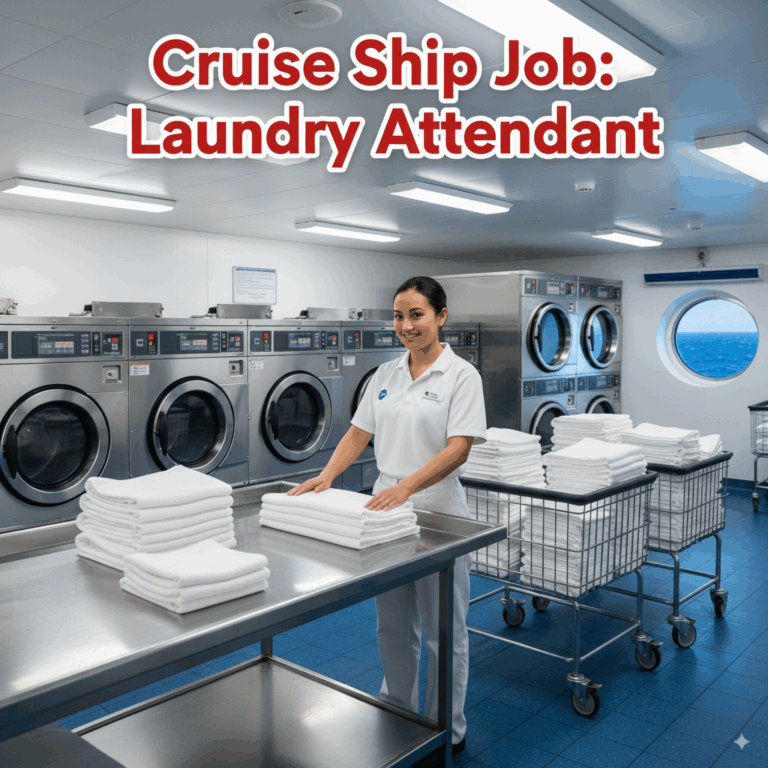
Do Cruise Ship Employees Have Laundry Facilities?
Yes! Cruise ships generally have designated laundry facilities for crew members.
Depending on the ship, you’ll usually find washing machines, dryers, and ironing facilities in crew areas.
Some cruise lines also provide laundry services for certain uniforms, although personal clothing is typically your responsibility.
Crew laundry rooms can get busy, especially during evenings or popular break times.
A few things to remember:
- Bring enough underwear and socks for at least a week.
- Follow the ship’s laundry rules.
- Don’t leave your clothes unattended for long periods.
- Label personal items when necessary.
- Avoid bringing clothing that requires complicated care.
Tip: Quick-drying clothes are especially convenient when living onboard, and they take up less luggage space.
Can I Bring My Laptop, Gaming Console, or Other Electronics?
Yes, most cruise lines allow personal electronics, including laptops, smartphones, tablets, headphones, and portable gaming devices.
These can be particularly useful during your free time, especially when you’re spending several months away from home.
However, there are a few things you should consider.
Cabin space is limited. A large gaming console or computer monitor may not be practical when sharing a small cabin.
Internet access varies. Online games and large downloads may be affected by connection speed, data limits, or internet costs.
Electrical safety rules apply. Certain appliances, including hot plates, irons, and personal cooking equipment, may be prohibited.
Before packing, check your cruise line’s approved and prohibited items list.
My advice: A laptop, tablet, or handheld gaming console is usually more practical than bringing an elaborate gaming setup.
Can Married Couples Work on the Same Cruise Ship?
Yes! Many couples work together on cruise ships, sometimes in completely different departments.
It’s not uncommon to meet married couples or partners who have built careers working at sea.
However, getting hired by the same cruise line doesn’t automatically mean you’ll be assigned to the same ship. Each person must qualify for their own position, and assignments depend on staffing requirements. From my previous experience, my wife and I always got assigned to the same ship. Sometimes one of us would need to extend our contracts so that our sign-on and sign-off dates would align, as each position/deparments have different contract lengths.
Royal Caribbean, for example, welcomes applications from couples but does not guarantee that partners will be placed together.
If you’re applying as a couple, mention your situation during the recruitment process.
Also, don’t assume you’ll automatically share a cabin. Couples’ accommodation arrangements depend on company policies, available space, and approval.
Working Hours & Contracts
What Does a Typical Workday Look Like on a Cruise Ship?
There isn’t one typical workday that applies to everyone onboard. Your schedule depends on your department, position, and the ship’s itinerary.
For example:
Waiters and restaurant staff may work during breakfast, lunch, and dinner, with breaks between meal services.
Housekeeping employees often have busy mornings preparing cabins, followed by additional duties later in the day.
Photographers may work during embarkation, port activities, formal nights, and special events.
Cruise staff and entertainers might have rehearsals, daytime activities, and evening performances.
Reception and guest services staff may work rotating shifts because guest assistance is needed throughout the day and night.
Many crew members work split shifts, meaning they have several separate working periods throughout the day.
Cruise ship schedules can be demanding, but applicable maritime regulations establish minimum rest requirements.
Tip: During your interview, ask what a normal working day looks like for someone in your specific position. This will give you a more realistic idea of what to expect.
Can I Choose Which Cruise Ship or Destination I Work On?
Usually, no. Cruise lines assign employees based on operational needs and available positions.
You might dream of working in the Caribbean or Mediterranean, but your first assignment could be somewhere completely different.
Ship assignments depend on factors such as:
- Available vacancies
- Department staffing requirements
- Your qualifications and experience
- Contract dates
- The company’s operational needs
Some employers allow returning crew members to request particular ships or itineraries, but these requests are not guaranteed. You may also be transferred to another ship during your employment.
My advice: Be flexible, especially during your first contract. Some of the most memorable experiences can happen in destinations you never expected to visit.
How Much Time Off Will I Have Between Cruise Ship Contracts?
The time between contracts varies depending on your employer, position, and next assignment.
After completing a contract lasting several months, crew members commonly spend a period at home before returning to another ship.
Some employees may have several weeks off, while others might spend a few months at home. A good rule to follow is to have a week off for each month worked; for example, for a 6-month contract, you might have between 1.5 and 2 months off.
However, time between contracts is not necessarily the same as paid vacation.
The Maritime Labour Convention establishes paid annual leave entitlements for covered seafarers, but how leave is calculated, paid, and scheduled depends on applicable rules and employment agreements.
Before signing your contract, ask:
- How long can I expect to stay home between assignments?
- Will I receive paid leave or accrued vacation pay?
- When will I know my next joining date?
- Can I request additional time at home?
- What happens if my next assignment is delayed?
Tip: If you rely on cruise ship employment as your main source of income, budget carefully for the months when you aren’t onboard.
Salary, Money & Benefits
How Do Cruise Ship Workers Get Paid?
Most major cruise lines pay their employees electronically.
Depending on the company, your salary might be deposited into a bank account, transferred to a payroll card, or paid through another approved system.
Many international cruise lines use U.S. dollars for payroll, but payment currency and frequency vary.
Some positions receive a fixed salary, while others may earn additional income through tips, commissions, or performance incentives.
Before joining, make sure you understand:
- How frequently you’ll be paid
- Which currency you’ll receive
- Whether your salary includes tips or commissions
- How you can transfer money to your home country
- Whether transfer or withdrawal fees apply
Tip: If you plan to send money home regularly, compare international transfer costs and exchange rates before choosing a payment method.
Do Cruise Ship Employees Pay Taxes?
Working on a cruise ship does not automatically mean your income is tax-free.
Your tax obligations depend on your citizenship, tax residency, employment arrangements, and the tax laws that apply to your situation.
For example, U.S. citizens and U.S. tax residents generally must report their worldwide income, including qualifying income earned while working at sea.
Other countries have different rules, and tax treaties may affect how employment income is treated.
Some cruise lines may withhold taxes for certain workers, while others leave tax reporting to employees.
Important: Don’t assume you have no tax obligations just because your cruise line is registered in another country.
If you’re planning to work onboard for several years, consider speaking with a tax professional who understands international or maritime employment.
Can You Save Money While Working on a Cruise Ship?
Absolutely! One of the biggest financial advantages of working on a cruise ship is that your accommodation and everyday meals are generally included.
This means you may spend considerably less on living expenses than you would while working on land.
However, that doesn’t mean you’ll automatically save money.
It’s surprisingly easy to spend your paycheck on:
- Shopping and souvenirs
- Restaurants and sightseeing in port
- Internet and mobile data
- Crew bar purchases
- Personal items
- Travel during your time off
If saving money is your priority, consider setting aside a portion of each paycheck before spending anything else.
For example, saving $500 per month during an eight-month contract would give you $4,000 in savings before returning home.
My advice: Enjoy the destinations and experiences, but create a realistic budget. Cruise ship life can be a great opportunity to build savings if you’re disciplined with your spending.
Is Medical Care Free for Cruise Ship Employees?
Major cruise lines generally provide onboard medical care for crew members, although exact coverage depends on the employer and applicable maritime requirements.
Cruise ships have medical facilities staffed by healthcare professionals who can evaluate illnesses and injuries.
For example, Royal Caribbean states that medical assistance is available to employees onboard at no cost.
However, the ship’s medical center is not intended to replace all your routine healthcare needs.
Before joining, make sure you understand what medical services are covered, whether treatment ashore is included, and what happens if you require extended medical care.
If you take prescription medication, check the company’s medical requirements and bring an appropriate supply of approved medication for your assignment.
Exploring Destinations & Making Friends
Can Cruise Ship Crew Members Get Off the Ship in Port?
Yes! Exploring different destinations is one of the best perks of working on a cruise ship.
When your work schedule allows and you have the necessary immigration clearance, you may be able to leave the ship and explore the ports you’re visiting.
Depending on your itinerary, you could spend your free time at a Caribbean beach, walking through a European city, or trying local food in a destination you’ve never visited.
However, there are a few important limitations.
Your work schedule comes first. You may be assigned duties while the ship is in port.
Immigration restrictions may apply. Some countries require specific documentation or limit shore leave for certain nationalities.
You must return on time. Missing the crew’s all-aboard time can lead to serious disciplinary and immigration consequences.
Tip: Even if you only have a couple of hours off, you can often enjoy a short walk, visit a café, or explore attractions near the port.
Can You Make Friends While Working on a Cruise Ship?
Definitely! For many people, the friendships are one of the best parts of cruise ship life.
Cruise ships bring together employees from dozens of countries, creating a unique international environment.
You’ll work alongside people with different cultures, languages, traditions, and backgrounds.
Because you live and work together, friendships can develop quickly.
You might spend your free time exploring ports, attending crew events, watching movies, or simply relaxing with friends after a long shift.
Of course, living in such a close environment also means you’ll occasionally experience disagreements or personality clashes.
Learning to respect different cultures and communicate effectively is an important part of working onboard.
One of the most rewarding aspects of cruise ship life is building friendships with people you might never have met otherwise. Many of these connections continue long after your contracts end.
Health, Safety & Personal Wellbeing
What Happens If I Get Sick While Working on a Cruise Ship?
If you become sick while onboard, you should report your symptoms and follow the company’s medical procedures.
Cruise ships have medical centers with healthcare professionals who can assess your condition and recommend treatment.
Depending on your illness, you may receive medication, be temporarily excused from work, or require additional care.
For more serious medical conditions, you might need treatment ashore or medical repatriation.
If your illness could be contagious, the medical team may temporarily isolate you to protect other crew members and passengers.
Important: Don’t try to work through serious symptoms because you’re worried about missing a shift. Reporting illness early helps protect both your health and the people around you.
What Happens During Emergency Drills on a Cruise Ship?
Safety training is a mandatory part of working on a cruise ship.
Every crew member has specific emergency responsibilities, which may be completely different from their regular job.
Before starting your duties, you’ll receive safety instructions and training relevant to your position.
During drills, you may practice:
- Reporting to your assigned muster station
- Responding to emergency alarms
- Following evacuation procedures
- Assisting passengers
- Using emergency equipment
- Carrying out assigned safety responsibilities
Cruise ships conduct regular drills to make sure employees know how to respond during an emergency.
Even if you work in a restaurant, retail store, or entertainment department, safety responsibilities are part of your job.
Tip: Take every drill seriously. Knowing where to go and what to do during an emergency is essential for everyone onboard.
Is Working on a Cruise Ship Stressful?
It can be. Cruise ship life offers amazing opportunities, but it’s not always easy.
Working at sea means adjusting to a completely different lifestyle.
You may work long or irregular hours, share a small cabin, and spend several months away from your family and friends.
Unlike working on land, you can’t simply leave your workplace and go home at the end of the day.
Some of the most common challenges include:
- Missing family and important celebrations
- Limited privacy and personal space
- Physically demanding schedules
- Adjusting to different cultures and personalities
- Limited internet access or connectivity problems
- Feeling tired or homesick during long contracts
At the same time, cruise ship employment can be incredibly rewarding.
You’ll have opportunities to travel, meet people from around the world, develop new skills, and gain experiences that few traditional jobs offer.
My advice: Maintain regular contact with loved ones, get enough rest, make time for activities you enjoy, and don’t hesitate to ask for support if you’re struggling.
Many cruise lines have crew welfare programs, recreational activities, and resources to help employees manage the challenges of shipboard life.
The key is to arrive with realistic expectations. Cruise ship life isn’t a permanent vacation, but for the right person, it can be one of the most memorable experiences of a lifetime.
Want to Learn More About Cruise Ship life?


We have many more posts about ship life in general. Visit our Latest Posts page to learn more about what’s like working on a cruise ship.